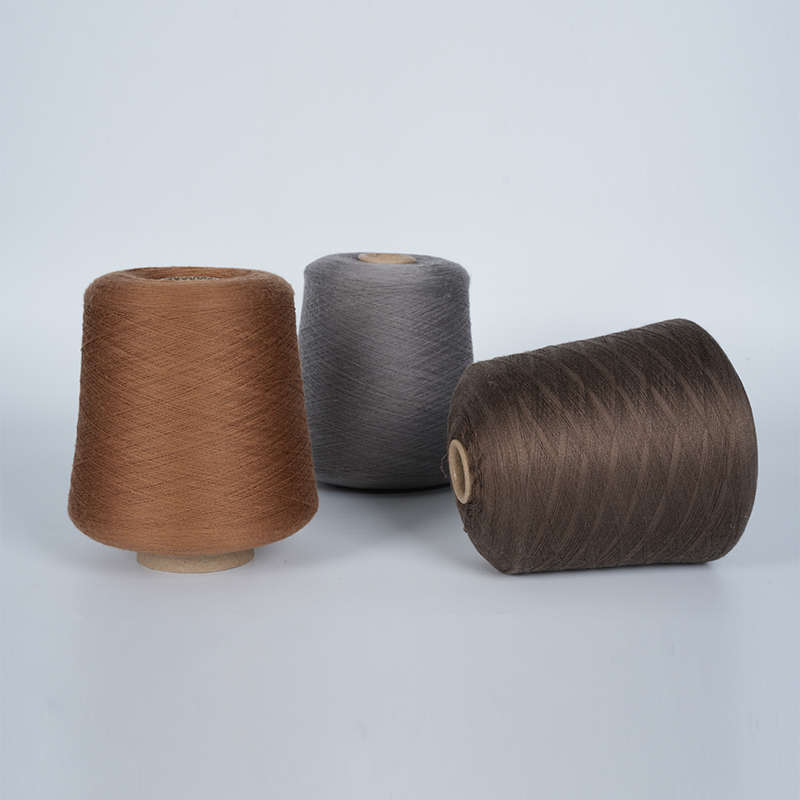
Cotton Combed Ramie Yarn: Properties, Blends & Sourcing Guide
Content
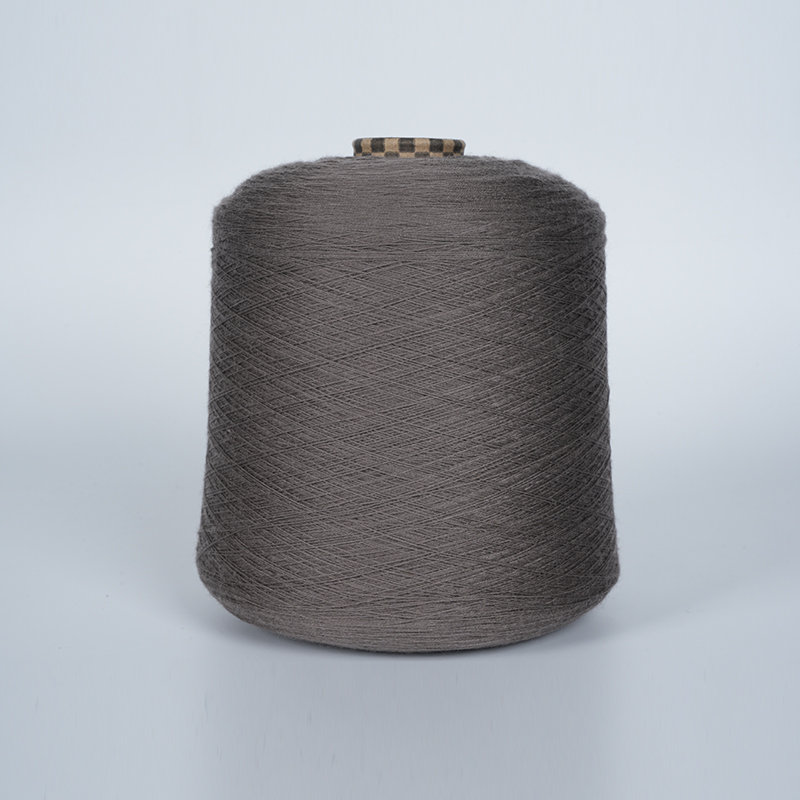
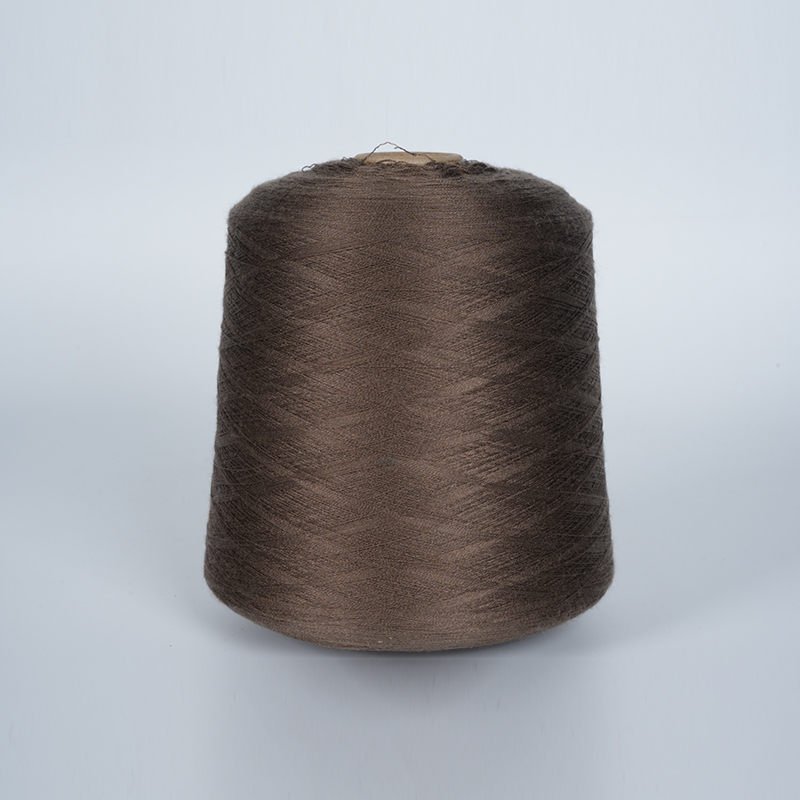
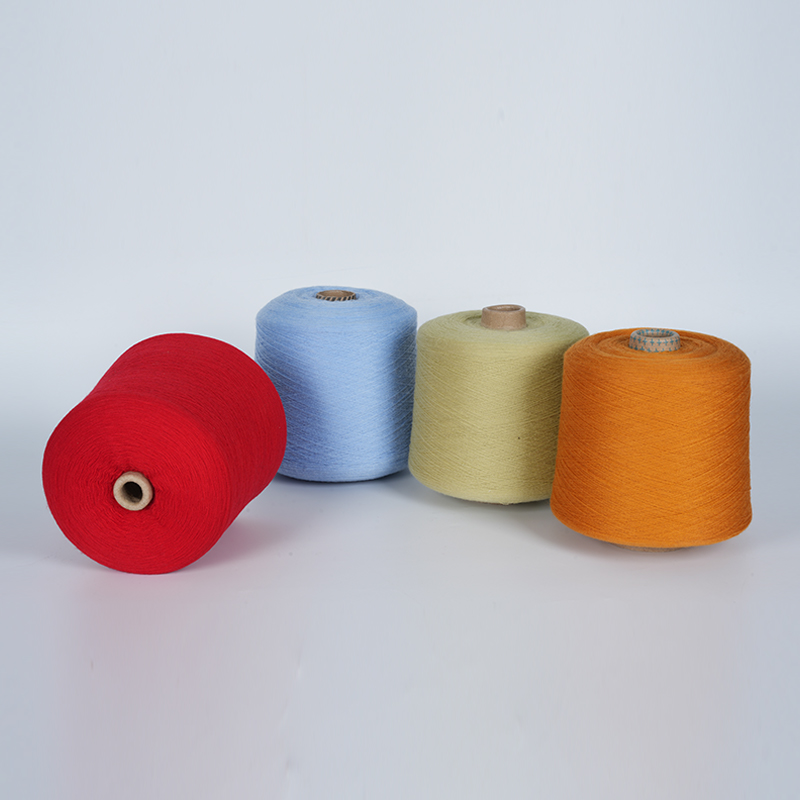
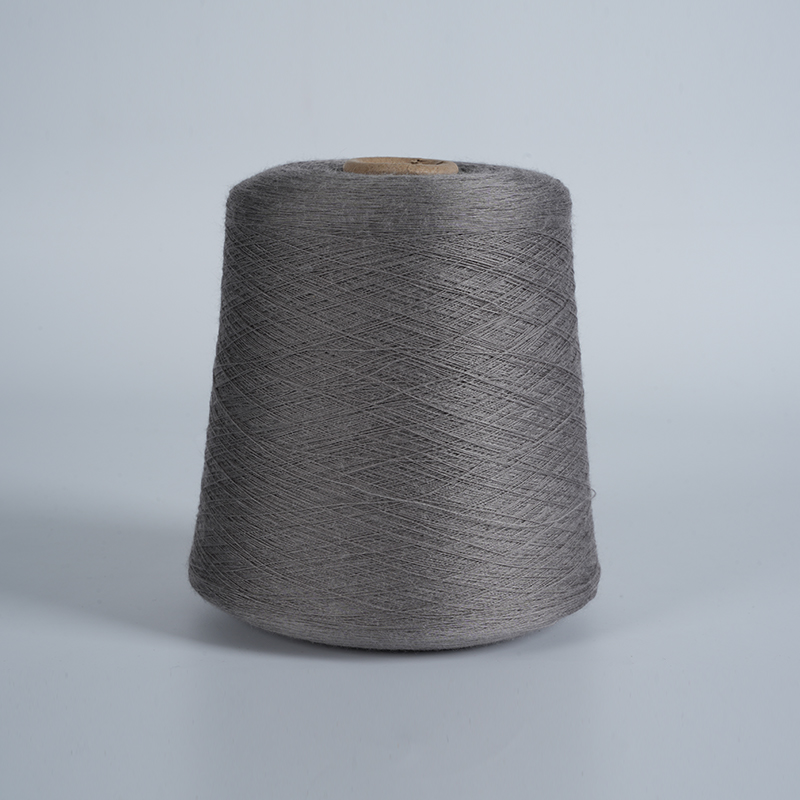
Cotton combed ramie yarn is a blended yarn combining two natural plant-based fibers — combed cotton and ramie — twisted together into a single continuous strand used in textile manufacturing. The blend leverages the complementary properties of each fiber: combed cotton contributes softness, flexibility, and dyeability; ramie (also known as China grass or white ramie) contributes exceptional tensile strength, natural luster, moisture absorption, and antibacterial properties. The result is a yarn that outperforms either fiber in isolation across the combination of softness, strength, breathability, and durability that modern textile applications demand.
The "combed" designation is critical to understanding this yarn's quality tier. Combing is a fiber preparation process that follows carding and removes short fibers, neps, and remaining impurities from the cotton fiber bundle, leaving only the longest, most parallel fibers for spinning. Combed cotton yarns exhibit significantly higher tenacity, smoother surface texture, lower pilling propensity, and superior dye uptake uniformity compared to carded (uncombed) cotton yarns of equivalent count. The combing process removes approximately 15–25% of the cotton fiber as noils (short fiber waste), which accounts for the premium price of combed cotton and combed cotton blend yarns over their carded equivalents.
Ramie is one of the oldest textile fibers in human history — archaeological evidence of ramie textile use in China dates back over 5,000 years — and it remains a commercially significant fiber today, with global production concentrated in China, which accounts for approximately 95% of world ramie output, followed by Brazil and the Philippines. Its extraordinary natural tensile strength — ramie fiber has a tenacity of 400–900 mN/tex, making it among the strongest natural textile fibers — combined with its natural white color and silk-like luster makes it a premium blending partner for cotton in apparel, home textile, and industrial yarn applications.
The commercial rationale for blending combed cotton with ramie lies in the performance synergies the combination creates. Each fiber compensates for the other's limitations while amplifying shared advantages — producing a yarn with a property profile that justifies its premium price positioning in the market.
Ramie fiber is significantly stronger than cotton — approximately 2–3 times higher in dry tenacity — and its strength actually increases when wet, unlike cotton which loses approximately 20% of its dry strength when saturated. Blending ramie with combed cotton produces yarns with measurably higher breaking tenacity and abrasion resistance than equivalent-count all-cotton yarns, enabling either the production of higher-strength fabrics at equivalent yarn count or the use of finer (higher count) yarns that achieve equivalent fabric strength at lower weight. For applications such as home textiles, workwear, and summer apparel where fabric durability and wash cycle performance are primary concerns, the strength contribution of the ramie component is a commercially meaningful advantage.
Both cotton and ramie are hydrophilic cellulosic fibers with high moisture absorption capacity, but ramie's moisture regain (8–12%) is marginally higher than cotton's (7–8.5%), and its larger fiber diameter and relatively smooth surface enable faster moisture release — the fabric dries more quickly after perspiration absorption than equivalent all-cotton constructions. This combination of high absorption and rapid drying makes cotton-ramie blends particularly effective for summer apparel, activewear, and tropical climate clothing where thermal comfort depends on both moisture uptake from the skin surface and efficient evaporative cooling.
Ramie fiber has a natural silk-like sheen — a result of its smooth, rounded cross-section and high crystallinity — that is imparted to cotton-ramie blend fabrics even at modest ramie content levels (20–30%). This luster property differentiates cotton-ramie fabrics visually from all-cotton equivalents and contributes to the premium positioning of cotton-ramie apparel in the market. The natural white color of degummed ramie also improves the bleaching and dyeing characteristics of the blended yarn compared to natural cotton, which carries yellow-brown pigmentation that requires more aggressive bleaching to achieve comparable whiteness.
Ramie fiber exhibits inherent antibacterial activity — attributed to its dense crystalline cellulose structure that resists bacterial penetration and colonization — that has been documented in multiple textile research studies. Cotton-ramie blend fabrics show statistically significant reduction in bacterial growth compared to all-cotton equivalents of equivalent construction in standardized antimicrobial testing (AATCC 100, ISO 20743). While the antibacterial effect is less potent than silver or zinc-based functional finishes, its inherent nature — not dependent on a finish that washes out over time — makes it a durable and marketable property for applications including intimate apparel, bedding, sportswear, and medical textile applications.
Ramie's primary limitation as a textile fiber — and the reason it has historically not displaced cotton in mainstream markets despite its superior strength and luster — is its stiffness and low elasticity. Ramie fiber has very low elongation at break (2–4% versus cotton's 7–8%) and a high bending rigidity that makes high-ramie-content fabrics feel stiff and uncomfortable against the skin, particularly in draped garments where fabric hand is a primary quality criterion. Blending with cotton moderates this stiffness significantly: cotton-ramie blends with 30–50% ramie content typically achieve acceptable hand softness while retaining meaningful strength and luster contributions from the ramie component. Higher ramie content (60–80%) produces stiffer fabrics appropriate for structured garments, home textiles, and woven upholstery applications where stiffness is not a negative attribute.
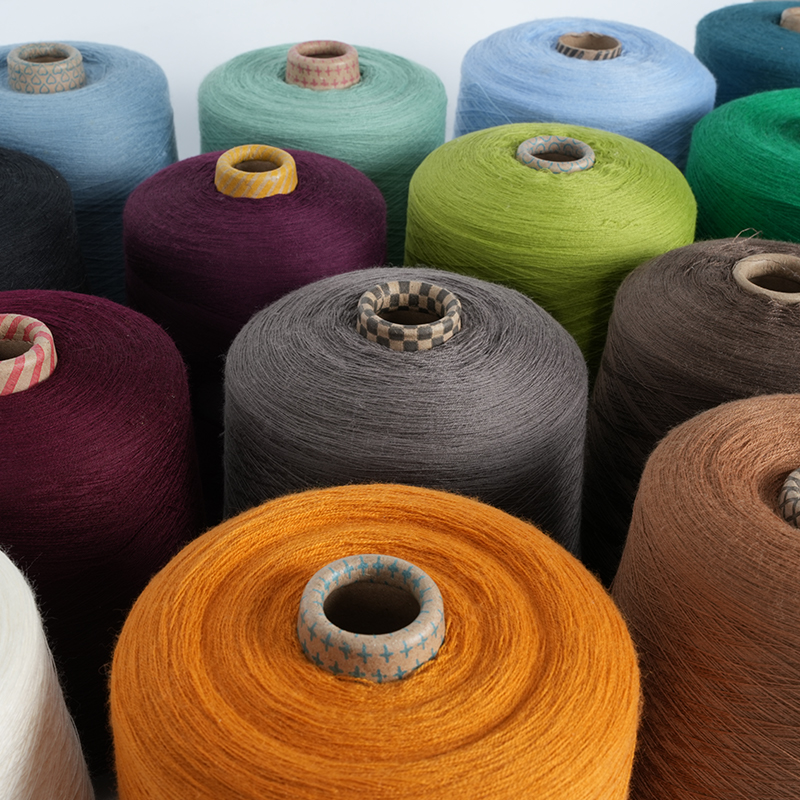
Cotton combed ramie yarns are produced across a range of blend ratios, yarn counts, and spinning system configurations that together determine the yarn's technical performance and the fabric properties it will deliver in end-use applications.
| Blend Ratio (Cotton/Ramie) | Typical Count Range (Ne) | Key Characteristics | Primary Applications |
|---|---|---|---|
| 80/20 | Ne 20–40 | Soft hand, mild luster, moderate strength gain | T-shirts, jersey knits, intimate apparel |
| 70/30 | Ne 20–60 | Balanced softness and luster, good durability | Shirts, blouses, summer dresses, bed linen |
| 55/45 | Ne 16–40 | Pronounced luster, high strength, firmer hand | Woven shirts, suiting fabrics, table linens |
| 50/50 | Ne 10–30 | Equal fiber contribution, linen-like appearance | Upholstery, curtains, structured outerwear |
| 30/70 | Ne 8–20 | High strength and stiffness, prominent luster | Canvas, heavy wovens, industrial textiles |
Cotton combed ramie blends are spun primarily on ring spinning systems, which produce yarns with the highest tenacity, best uniformity, and finest achievable counts — characteristics that justify the higher production cost of ring spinning for premium blend yarns. Open-end (rotor) spinning can produce cotton-ramie blends at coarser counts (below Ne 30) at higher throughput and lower cost, but the resulting yarns have lower tenacity and a rougher surface texture compared to ring-spun equivalents, limiting their applicability to less demanding end-uses such as industrial textiles and low-cost home furnishing fabrics. Air-jet spinning is generally unsuitable for high-ramie-content blends due to ramie's low fiber cohesion and tendency to produce irregular yarn structures in air-jet systems.
Cotton combed ramie yarns require specific processing knowledge at multiple stages of the textile manufacturing chain. Ramie's chemical composition and physical structure create processing challenges that must be managed correctly to achieve optimal fabric quality.
Raw ramie fiber (known as china grass) is bonded by a matrix of gums — primarily pectin, lignin, and hemicellulose — that must be removed before spinning to produce a spinnable textile fiber. Degumming is carried out by chemical treatment (alkali boiling with sodium hydroxide, or biological treatment using pectinase enzymes) that dissolves the gum matrix while preserving the cellulose fiber. Incomplete degumming leaves residual gums that cause harsh hand, reduced dye uptake, and fiber bundle separation during spinning — the most common quality issue in lower-grade ramie fiber used in commodity blend yarns. Premium yarn producers specify fully degummed ramie with residual gum content below 1% by weight, verified by standardized gum content testing.
Both cotton and ramie are cellulosic fibers and are dyed with the same reactive, vat, and direct dye classes — simplifying the dyeing process for blends compared to fiber combinations requiring entirely different dye systems for each component. However, ramie's higher crystallinity results in lower dye uptake at equivalent dyebath conditions compared to cotton — ramie fibers in a blend will appear slightly lighter than cotton fibers unless dyeing conditions are adjusted (higher temperature, longer dyeing time, or mercerization pretreatment) to increase ramie accessibility to dye molecules. This differential dye uptake can create a heather or melange appearance in solid-color dyeing — sometimes a desirable aesthetic effect, sometimes a quality defect requiring process optimization to minimize.
Cotton-ramie fabrics, particularly at higher ramie content, benefit significantly from softening finishes applied after dyeing to counteract ramie's inherent stiffness. Silicone softeners — either macro-emulsion, micro-emulsion, or reactive silicone types — are the most effective finishing agents for improving the hand of high-ramie-content fabrics, reducing bending rigidity by 20–40% while maintaining the luster and strength that are ramie's primary contributions to the blend. Enzyme finishing (cellulase treatment) can further improve surface smoothness and reduce pilling tendency, though excessive cellulase treatment reduces yarn tenacity and requires careful process control to optimize the hand-strength balance.
Cotton combed ramie yarn occupies a favorable position in the sustainable textile materials landscape, with both component fibers offering natural fiber credentials that differentiate them from synthetic alternatives in an era of growing consumer and regulatory focus on textile sustainability.
Ramie is among the most environmentally efficient textile crops globally. It requires no pesticides — its natural resistance to insect pests eliminates the chemical crop protection inputs that account for a significant share of conventional cotton's environmental burden — and its water requirements are moderate compared to conventional cotton, which is among the most water-intensive of all major crops. Ramie is a perennial crop yielding 3–6 harvests annually from a single planting, with a productive field life of 6–20 years, dramatically reducing the tillage, replanting, and soil disturbance impacts associated with annual crops. Its root system provides effective erosion control on hillside cultivation sites common in Chinese production regions.
Organic cotton, when combined with ramie in certified organic blends, produces yarns eligible for GOTS (Global Organic Textile Standard) certification — the most widely recognized organic textile certification in international trade, required by a growing list of European and North American retail buyers as a condition of sustainable product range listings. GOTS certification covers both fiber origin (certified organic agricultural production) and processing (restricted substances in dyeing and finishing), providing end-to-end supply chain credibility that increasingly commands a retail price premium.
Both cotton and ramie are fully biodegradable under composting and soil disposal conditions, providing a meaningful end-of-life advantage over synthetic fiber textiles in markets where extended producer responsibility legislation for textile waste is being introduced — including the EU Textile Strategy's 2025–2030 implementation timeline.
The cotton combed ramie yarn supply chain is geographically concentrated, with China the dominant production hub by a substantial margin — accounting for the majority of global ramie fiber production and a large share of cotton-ramie blend yarn spinning capacity. Hunan, Hubei, Sichuan, and Guangdong provinces house the principal ramie fiber processing and yarn spinning facilities, with significant yarn export activity directed toward apparel manufacturers in Bangladesh, Vietnam, India, and Turkey, and toward knit and woven fabric producers in Europe and North America.
Quality evaluation of cotton combed ramie yarn for procurement purposes should cover the following key parameters: yarn count accuracy and count variation (CV% of count, target below 2.0% for premium quality), yarn tenacity (minimum breaking strength per ASTM D2256 or ISO 2062, specified for the count and blend ratio), elongation at break, imperfections (thin places, thick places, neps per USTER® Classimat standards), hairiness index, and evenness (Uster CV%, target below 12% for Ne 30 ring-spun blends). Reputable yarn suppliers provide Uster test data for each production lot as standard commercial documentation.
For buyers sourcing into regulated markets, the following certifications and compliance verifications are relevant: OEKO-TEX Standard 100 certification confirms that the finished yarn does not contain harmful levels of regulated substances and is safe for skin contact applications. BCI (Better Cotton Initiative) or organic cotton certification provides supply chain credibility for the cotton component. Ramie fiber origin documentation — increasingly requested by due diligence-conscious brands — should confirm that fiber is sourced from suppliers compliant with applicable labor and environmental regulations in Chinese production provinces.
 Contact Us
 Products
 Send An E-mail
No. 189 Pengfei Road, Industrial Park, Tudian Town, Tongxiang City, Zhejiang Province, China
 Mobile


 English
 Français
 Español
 عربى
عربى