Understanding Yarn Labels: Weight, Fiber, Gauge, Dye Lot, and Care Symbols
Content
Two yarns can look the same on a shelf and still behave completely differently on the needle. The paper band wrapped around the skein is what separates them. A yarn label is a compact specification sheet: it gives you the fiber content, yarn weight, yardage, gauge, dye lot, and care instructions in one small space. Read it carefully before you buy, and you will avoid the most common reasons projects go wrong.
The label exists for a simple reason. Yarn is made from different fibers, twisted in different ways, and dyed in different batches. Without the label, you cannot know what you are buying, how much you need, or how to wash the finished piece. Once you learn to read it, the label becomes a practical tool instead of a confusing collection of symbols.
Most consumer yarn labels follow a predictable layout. A standard label covers six main areas, even though the symbols may look different from one mill to another.
| Label section | What it tells you | Why it matters |
|---|---|---|
| Fiber content | The fibers used and their percentages | Sets drape, warmth, durability, and how the yarn reacts to washing |
| Yarn weight | Thickness category or yarn count | Determines whether the yarn suits a pattern gauge |
| Yardage and net weight | Length per ball and total weight | Lets you compare the amount of yarn and calculate project quantity |
| Gauge | Stitches and rows per 10 cm or 4 inches | Guides needle or hook size and expected fabric density |
| Dye lot | Batch number for a given color | Helps prevent mismatched shades in one order |
| Care symbols | Washing, drying, ironing, and dry-cleaning instructions | Protects the finished piece from careless handling |
Not every label contains every piece of information, but the more details you understand, the easier it is to compare yarns and decide whether a substitute will work.
Fiber content is one of the first things a label confirms. A typical label says something like 60% wool and 40% silk. The percentages matter because they define the balance between strength, luster, hand feel, and cost. A 100% wool yarn behaves differently from a blend containing cotton, silk, or synthetic fibers. For anyone choosing a yarn for a specific garment, the fiber content is the fastest way to narrow the options. If you want to compare how fibers behave before you commit, the complete guide to yarn types, selection, and uses is a useful starting point.
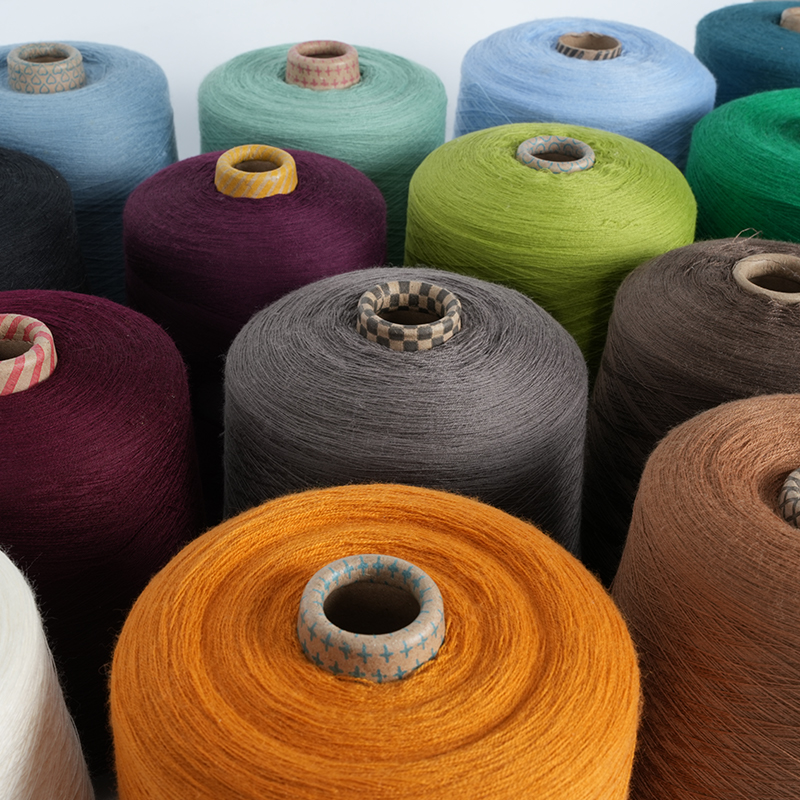
Blended labels usually list fibers in descending order of percentage. Our 60% wool 40% silk blend yarn, for example, puts wool first because wool is the dominant fiber. Reading the order can tell you whether a yarn is wool-rich or mostly a different fiber.
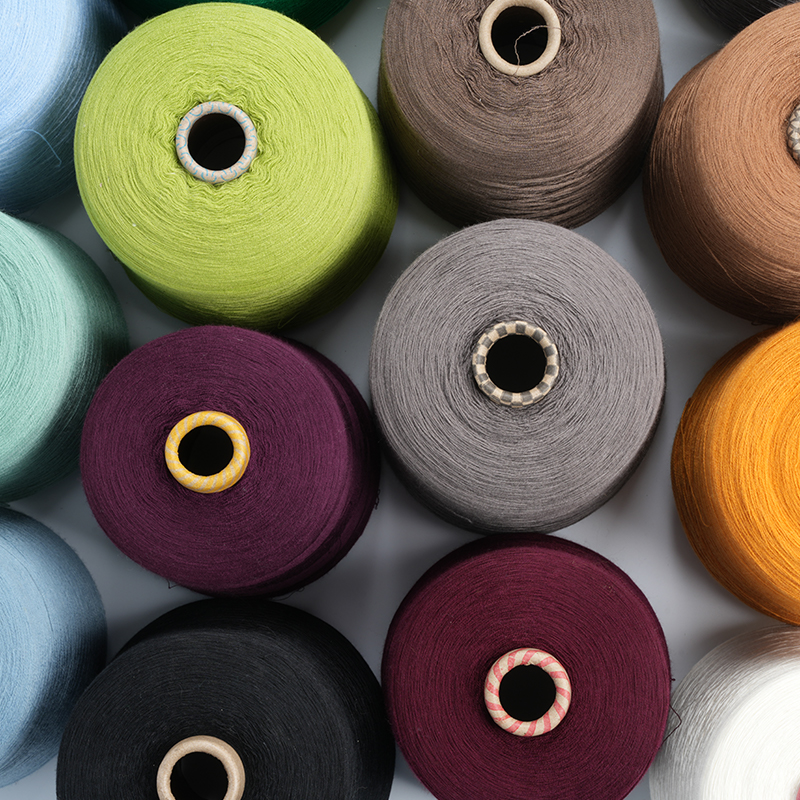 70Nm/2 60% Wool 40% Silk Blends Yarn Suppliers, Wholesale Company - Huafu TextilHuafu Textile is 70Nm/2 60% Wool 40% Silk Blends Yarn Suppliers and Company in China, Wholesale 70Nm/2 60% Wool 40% Silk Blends Yarn onli...View Product →
Yarn weight describes thickness. Consumer labels often show a numbered weight system from 0 to 7, with 0 being the finest and 7 being the bulkiest. This system, promoted by organizations such as the Craft Yarn Council, is a useful shorthand, but it is not a precise measurement. For exact work, look at the yarn count. In metric terms, a label that says 48Nm/2 means two plies of a 48-count yarn twisted together. The higher the number, the finer the yarn.
When a pattern tells you to match a weight category, that category is enough to find a starting point. When you are buying directly from a mill, the count is more reliable than the generic description. For a clear example of a standard wool base, our 48Nm/2 pure wool yarn gives a defined count and a repeatable fabric density.
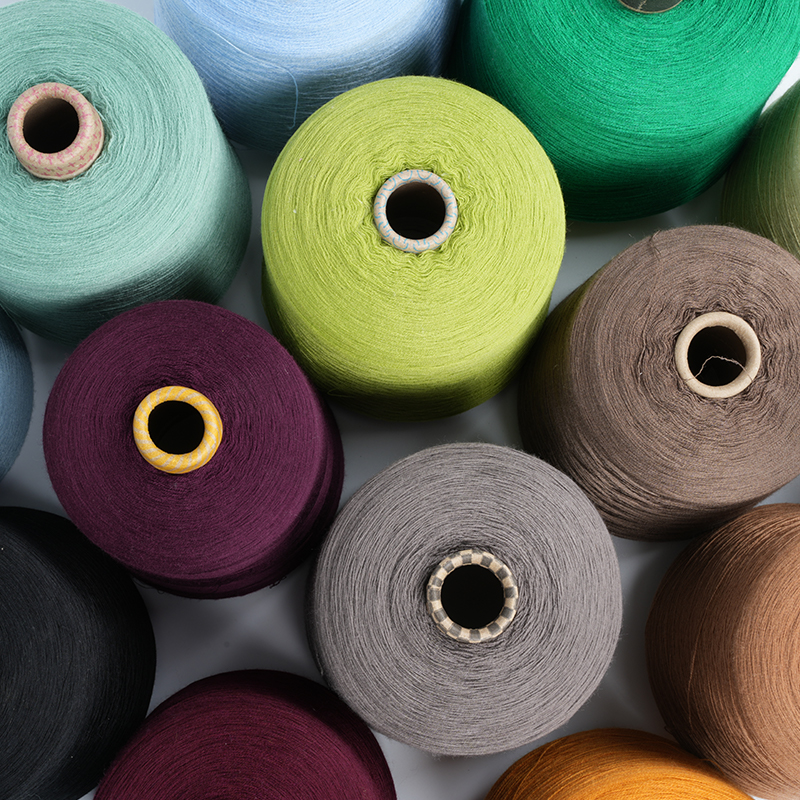 48Nm/2 Pure Wool Yarn Suppliers, Wholesale Company - Huafu Textile Co., Ltd.Huafu Textile is 48Nm/2 Pure Wool Yarn Suppliers and Company in China, Wholesale 48Nm/2 Pure Wool Yarn online, 48Nm/2 Pure Wool Yarn is c...View Product →
Yardage is exactly how much yarn you get. Labels list length in yards and meters, and net weight in grams and ounces. When two yarns have the same ball weight but different lengths, the one with more meters per gram is thinner or lighter. Compare yardage rather than grams when calculating how many balls to buy for a project. If you substitute a heavier yarn with less yardage per ball, you may need to buy more balls than the pattern suggests.
Gauge is the label's suggested stitch tension. You might see a swatch square marked 10 cm x 10 cm with 23 stitches and 30 rows. The label usually also recommends a needle or hook size. This tells you how the maker expects the yarn to knit or crochet. Treat it as a starting point rather than a guarantee. Your tension, stitch pattern, and fabric drape all shift once you change yarn or technique.
Color names can be poetic, but the dye lot number is technical. The lot number identifies the batch of dyeing, and different lots from the same color name can be subtly different. If you buy four balls and three of them share a lot, the fourth can stand out under daylight. Check every label before purchase. For larger production orders, ask the supplier whether the whole shipment belongs to one lot so your finished pieces stay consistent.
Care symbols are easy to ignore and expensive to regret. One symbol covers machine washing, another covers bleaching, another covers tumble drying, ironing, and dry-cleaning. The exact meanings can vary slightly by region, but most labels follow common international conventions. If you are unsure, wash a small swatch before washing the finished piece. Our wool yarn care guide explains the most common symbols in more detail.
Some labels mention special finishes that change how the yarn should be treated. A label that notes a Basolan-treated finish, for example, signals wool that has been processed to make it easier to care for. Basolan treated premium wool yarn is a practical choice when you want wool with a softer, more manageable finish.
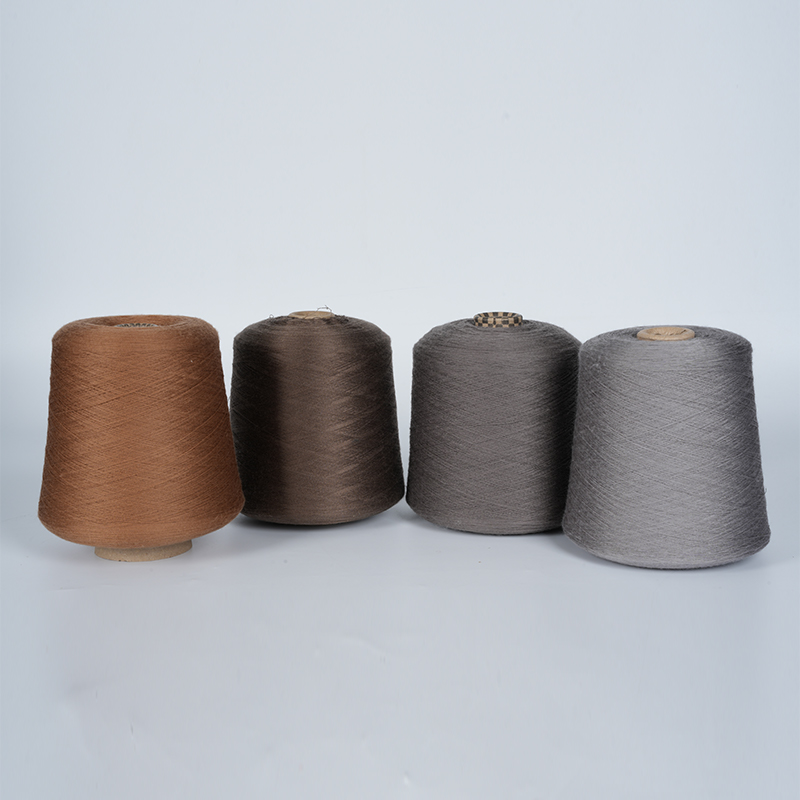 48Nm/2 Basolan Treated Premium Wool Yarn Suppliers, Wholesale Company - Huafu TeHuafu Textile is 48Nm/2 Basolan Treated Premium Wool Yarn Suppliers and Company in China, Wholesale 48Nm/2 Basolan Treated Premium Wool Y...View Product →
Substitution works when you match the properties that affect the finished piece. The label gives you enough information to compare two yarns in a few clear steps.
Following these steps will not guarantee an exact copy of the original yarn, but it will reduce the risk of choosing a substitute that looks fine in the store and behaves poorly in the garment. When a pattern gives a precise gauge, knitting a swatch is still the final test.
A label is necessarily short. It cannot describe the full character of a yarn or every production detail that matters in a finished product.
A label can say 100% wool, but it does not say whether the yarn is soft against the neck, stiff enough for a structured bag, or loose enough for a delicate shawl. Fibers pass through different spinning and finishing routes. The hand feel is the result of twist level, fiber length, and treatment, none of which can be summarized in a simple symbol.
Labels rarely mention shrinkage rates, pilling tendency, colorfastness, or strength. Those facts are measured in a laboratory rather than printed on a consumer band. This is why a reliable supplier provides test data for custom yarns. A smooth label is useful, but it is not proof of quality.
For a single project, one dye lot is enough. For a production run, you need consistency in count, twist, and shade across many cones. This is one reason buyers work directly with a wool yarn manufacturer. At our spinning mill, the yarn count is controlled throughout production and samples are tested in our own laboratory. That level of control goes beyond what the label can show.
The label is your first source of information, not your last. Read it before you calculate, before you buy, and before you wash. If you cannot find the information you need, ask the supplier. Yarn manufacturers expect that question.
 Contact Us
 Products
 Send An E-mail
No. 189 Pengfei Road, Industrial Park, Tudian Town, Tongxiang City, Zhejiang Province, China
 Mobile


 English
 Français
 Español
 عربى
عربى