What Weight Is Worsted Weight Yarn? Category 4 Explained With Gauge Charts
Worsted weight yarn is medium weight: Category 4 on the standard yarn weight system. Concretely, it knits at roughly 16 to 20 stitches per 4 inches (10 cm) in stockinette on 4.5 mm to 5.5 mm needles, measures about 9 to 11 wraps per inch, and usually runs near 200 yards (about 183 metres) per 100 g skein. Crocheted, the same yarn normally wants a 5.5 mm to 6.5 mm hook.
If your swatch lands in that band, you are holding worsted weight and most worsted patterns will behave as written. The confusion starts one step further in, because "worsted" also names a spinning method, and because the same thickness carries different names in different markets.
Content
English-language patterns and most retail labels follow the Craft Yarn Council's 0-to-7 scale. Worsted sits at 4, with DK and light worsted below it and bulky above. The table below shows the working ranges plus the tool sizes that usually produce the gauge each category promises.
| Category | Common names | Wraps per inch | Knit gauge (sts per 4 in) | Needle size (mm) | Hook size (mm) |
|---|---|---|---|---|---|
| 0 | Lace, thread | 30 and up | Pattern dependent | 1.5 to 2.25 | 1.6 to 2.25 |
| 1 | Super fine, sock, fingering | 14 to 30 | 27 to 32 | 2.25 to 3.25 | 2.25 to 3.5 |
| 2 | Fine, sport, baby | 12 to 18 | 23 to 26 | 3.25 to 3.75 | 3.5 to 4.5 |
| 3 | Light, DK, light worsted | 11 to 15 | 21 to 24 | 3.75 to 4.5 | 4.5 to 5.5 |
| 4 | Medium, worsted, aran, afghan | 9 to 12 | 16 to 20 | 4.5 to 5.5 | 5.5 to 6.5 |
| 5 | Bulky, chunky, craft, rug | 6 to 9 | 12 to 15 | 5.5 to 8 | 6.5 to 9 |
| 6 | Super bulky, super chunky | 5 to 6 | 7 to 11 | 8 to 12.75 | 9 to 15 |
| 7 | Jumbo, roving | 4 or fewer | 6 or fewer | 12.75 and up | 15 and up |
Aran is usually listed alongside worsted, and the two overlap. Aran often knits at 16 to 18 stitches per 4 inches; worsted patterns more often sit at 18 to 20. Treat them as neighbours rather than equals. Substituting a light worsted or DK into a worsted pattern without checking gauge changes the fabric width by roughly 10 to 15 percent, which is the difference between a sweater that fits and one that does not.
Two different ideas share the word. "Worsted weight" describes thickness. "Worsted spun" describes how the fibre was prepared and drafted: the wool is combed so long fibres lie parallel and short fibres are removed, then spun with firm twist. The result is a smooth, strong, relatively dense yarn with crisp stitch definition and little halo.
Woolen spinning is the opposite approach. Carded fibres stay jumbled, air is trapped inside the yarn, and the finished yarn is loftier, fuzzier and warmer for its weight, with softer stitch definition. A worsted-weight yarn can be woolen spun, and plenty are, which is why two balls from the same category can hit the same gauge and still give you very different fabric.
The practical consequences are easy to see. A woolen-spun worsted-weight yarn blooms after blocking, softens cables and forgives uneven colourwork, but pills faster at cuffs, collars and underarms. A worsted-spun version holds cables, ribbing and textured stitches cleanly and usually wears longer in high-friction areas, at the cost of a firmer, less airy hand. When a pattern says worsted weight, it is specifying gauge. When it says the fabric should have drape and halo, the spin is the part you have to think about.
Spinning mills work in this second sense, publishing yarns by count, ply and blend rather than by a craft-store category name, which is worth knowing if you ever buy in production volumes.
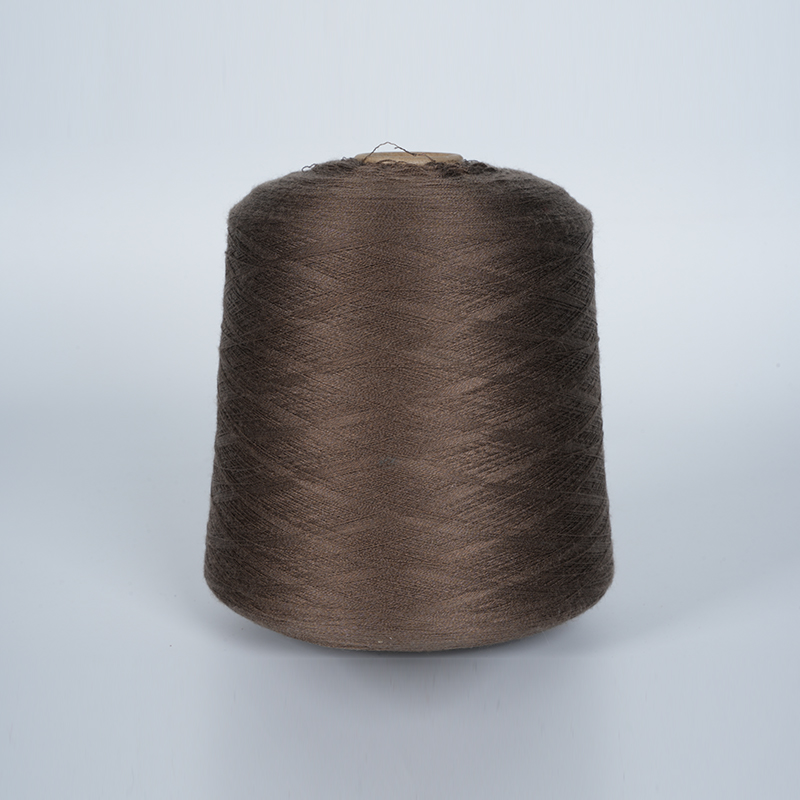
 60Nm/2 Pure Wool Yarn in 90s CountFine 17.5μm Australian wool yarn for soft, strong knitwear and luxury textiles; its count-and-ply spec suits bulk buyers checking gauge.View Product →
Wrap the yarn around a ruler without stretching it, keeping the strands touching but not overlapping, then count how many fit in one inch. Worsted weight lands at 9 to 11. Nine sits at the heavy end and behaves close to aran; eleven is close to DK, so a yarn at 11 wraps may knit up a size or two tighter than a pattern expects.
Cast on enough stitches for about 6 inches of stockinette, work the swatch, bind off and block it the way you intend to wash the finished item. Measure 4 inches across the middle and count stitches. Anything from 16 to 20 is worsted weight. Two knitters using the same ball can differ by 5 to 10 percent on gauge, so your own swatch always outranks the label.
As a rough check, worsted weight runs about 1.8 to 2.2 yards per gram for wool, meaning roughly 180 to 220 yards per 100 g skein. A yarn claiming worsted weight while offering 400 yards per 100 g is almost certainly a light worsted or DK. Fibre density bends this rule: cotton, silk and ramie are heavier per metre than wool, and acrylic sits close to wool. Use yardage as a sanity check, not as proof.
Worsted weight is the workhorse category for a simple reason: thick enough to show stitch patterns, thin enough to wear under a jacket. Sweaters, hats, mittens, blankets, cushion covers and stuffed toys all work at this gauge, and a hat takes an evening or two rather than a week.
Needle choice changes the garment more than most people expect. The same yarn on 4 mm needles gives a firm, structured fabric that resists sagging, which suits bags, toys and outerwear. On 5.5 mm needles it opens into a drapey fabric that suits shawls and loose cardigans. Cables and colourwork read clearly at this scale; fine lace does not, because the stitches are simply too large to show detail.
Ply counts are not a weight system. Australian 10-ply is roughly North American worsted, but a 2-ply can easily be thicker than a 4-ply when the singles are heavier, so the number on the band tells you about construction rather than thickness.
Mills use count instead. Metric count, written Nm, is the number of one-metre lengths per gram. A plied yarn written 48Nm/2 resolves to a resultant count of 24 Nm, or roughly 2,400 metres per 100 g, which is fine-gauge knitwear and suiting territory, far finer than a craft worsted. Worsted weight itself corresponds to about Nm 2, around 200 metres per 100 g, so a 4Nm/2 plied wool yarn lands in the same band.
For brands ordering yarn in bulk, the practical rule is to write composition, count, ply and target gauge on the spec sheet. Ambiguity at that stage turns into a rejected lot or a compensation claim three months later, and neither side enjoys the conversation.
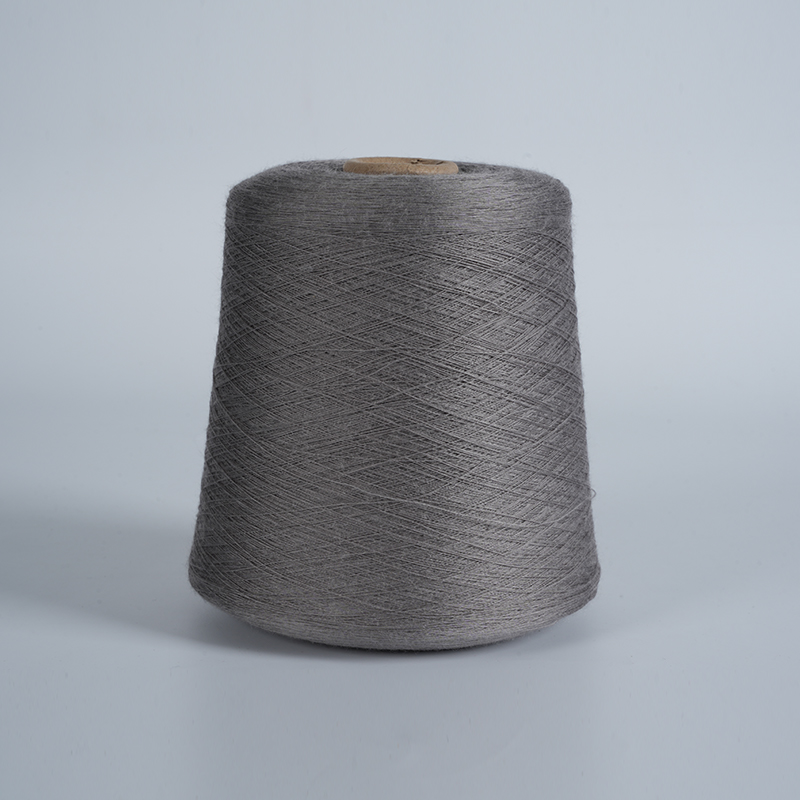
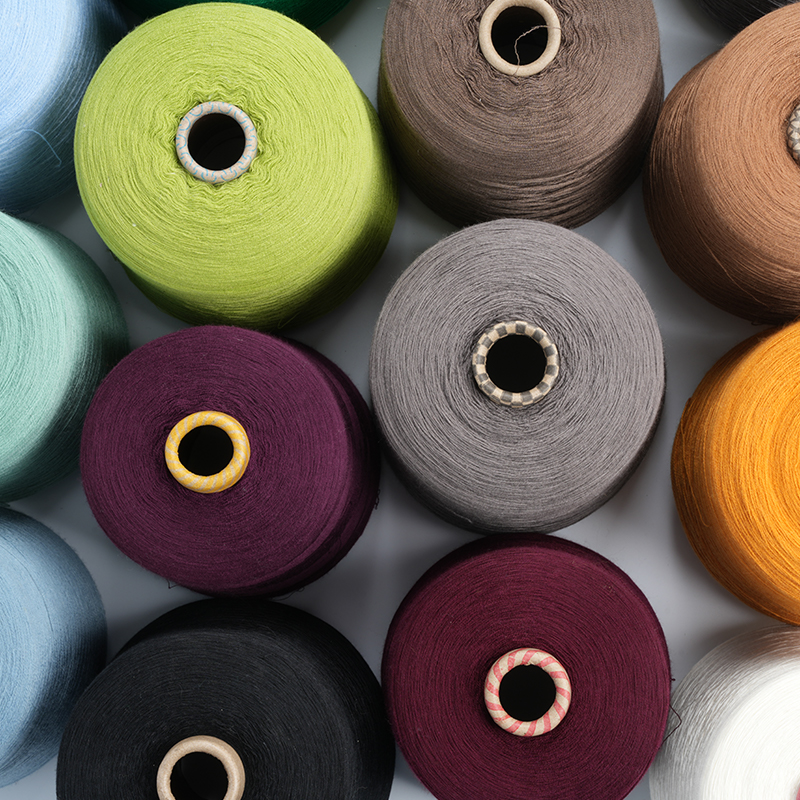 70Nm/2 Wool Silk Blend YarnLightweight wool-silk blend listed for warm, soft, subtly lustrous knitwear; check the stated composition against the spec sheet before bulk ordering.View Product →
When you substitute, match gauge and yardage rather than the category name. Two yarns can both be Category 4 and still behave differently, because blends shift the character of the fabric. Acrylic adds bounce and resilience and helps a garment keep its shape. Tencel adds sheen and drape. Silk adds fluidity and warmth. Cashmere protein fibre adds softness without the price of pure cashmere. Cotton and ramie add crispness and a little weight, which is why they suit structured summer knits. A quick look at how different yarn types behave at a given gauge saves most of the guesswork.
Care deserves the same scrutiny. Untreated wool felts and shrinks when it meets heat, moisture and agitation, so a hand-wash instruction is not a marketing preference but a physical fact. Yarns finished with a shrink-resist treatment, such as Basolan treatment, can carry a machine-wash claim that genuinely holds up. Test it on your swatch: wash and dry the swatch the way you plan to treat the finished piece, then remeasure. If the gauge moves more than about 5 percent, plan for it before the sleeves are knitted, not after.
 48Nm/2 Easy Care Premium Wool YarnFine 19.5μm wool yarn with easy-care shrinkage resistance for next-to-skin sweaters and scarves; wash-test a swatch to confirm gauge.View Product →
To summarise: worsted weight yarn is Category 4, medium, knitting at about 16 to 20 stitches per 4 inches on 4.5 mm to 5.5 mm needles, measuring 9 to 11 wraps per inch and running near 200 yards per 100 g. If you are planning a project today, wrap the yarn around a ruler and knit a blocked swatch; those two checks settle the question faster than any chart. If you are ordering yarn for production, specify composition, count, ply and target gauge, and confirm that the mill's count system matches yours.
Sources: yarn types, selection and uses.
 Contact Us
 Products
 Send An E-mail
No. 189 Pengfei Road, Industrial Park, Tudian Town, Tongxiang City, Zhejiang Province, China
 Mobile


 English
 Français
 Español
 عربى