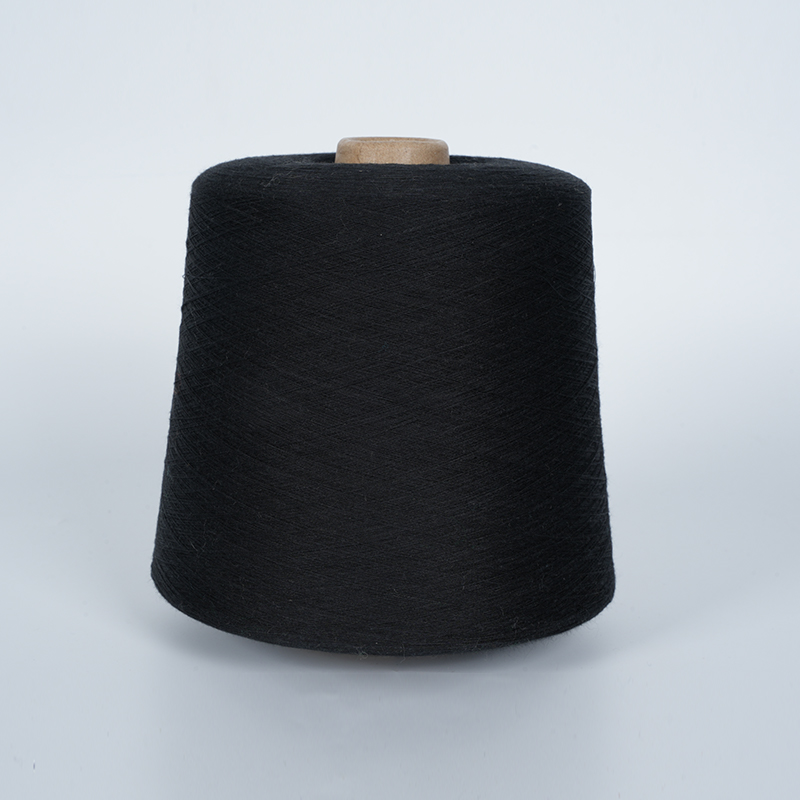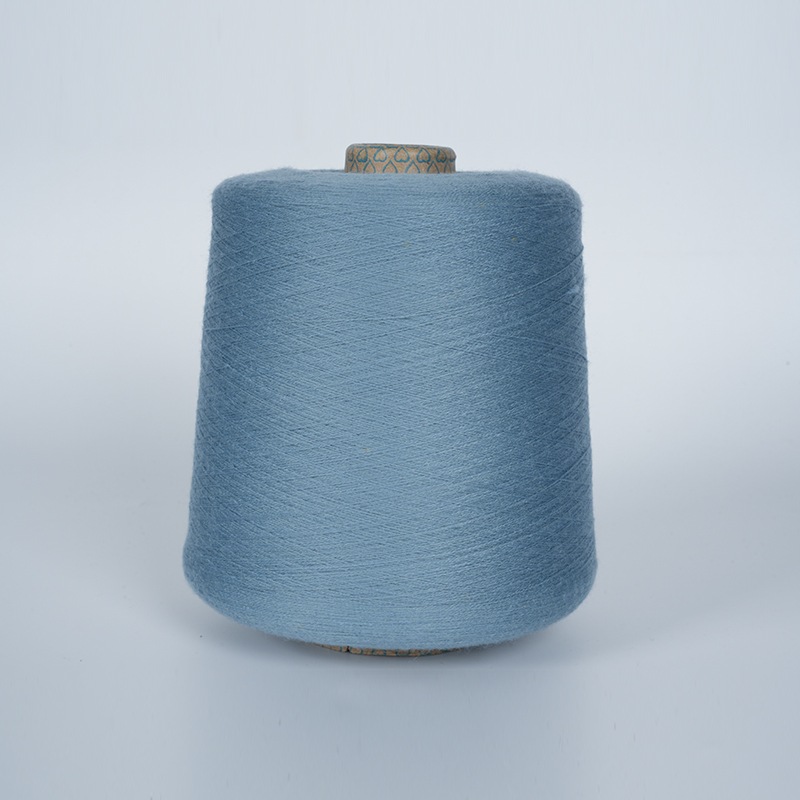
Is All Yarn Wool? A Practical Guide to Wool Yarn and Alternative Fibers
If you have ever compared a bag of soft merino yarn with a spool of cotton thread, you already know that they feel different, behave differently, and are made from different raw materials. The question "is all yarn wool" often comes from buyers who treat the two terms as synonyms. They are not. Yarn is the spun strand itself. Wool is a specific animal fibre that can be spun into yarn. So no, not all yarn is wool, and the difference matters more than most people think.
Content
The simple answer to the question is no. Yarn is a broad industry term that covers any continuous strand of spun fibres. According to the basic textile definition, yarn can be made from animal fibres such as wool, silk, or cashmere; plant fibres such as cotton, linen, or ramie; synthetic fibres such as acrylic, polyester, or nylon; and even recycled materials. Wool is simply one of many raw materials that can enter the yarn-making process.
When a label says "wool yarn", it means the yarn contains a significant amount of wool fibre. When a label says "pure wool yarn", it usually means 100% wool. But when a label just says "yarn", the fibre content could be almost anything. This is not a minor point. The distinction affects cost, washability, drape, warmth, durability, and the care instructions for the final product.
In ordinary conversation, many people use the word "wool" to refer to any yarn used for knitting or crochet. This habit is common in the United States, the United Kingdom, and other English-speaking markets. In those informal contexts, a knitter may say "I bought some wool" even if the product was actually acrylic or cotton. The confusion carries over to business situations. A buyer might send a request for "wool yarn" when their design team actually needs a yarn that can be machine-washed, or when their budget only allows for a wool blend.
In the textile trade, however, the terminology has to be precise. Yarn is the product. Wool is the fibre. If you are sourcing from a spinning mill in China, Turkey, or Italy, you need to name the fibre, the blend ratio, the yarn count, and the finishing treatment. Otherwise, the mill has no way to know what to produce.
To understand the practical impact, it helps to compare wool with the other fibres most commonly used in knitwear. The table below gives a quick overview.
| Fibre | Source | Key properties | Typical applications |
|---|---|---|---|
| Wool | Sheep fleece | Warm, resilient, moisture-regulating, naturally odour-resistant | Sweaters, knitted outerwear, scarves |
| Cotton | Cotton plant | Cool, soft, machine-washable, low elasticity | Summer knitwear, baby garments, towels |
| Silk | Silkworm cocoons | Lustrous, strong, lightweight, temperature-balancing | Luxury knitwear, lightweight shawls |
| Acrylic | Synthetic polymer | Durable, shrink-resistant, budget-friendly, easy to dye | Affordable knitwear, sportswear, blankets |
| Tencel | Wood pulp (lyocell) | Soft, breathable, biodegradable, drapey | Blended fine yarns, eco-conscious apparel |
The comparison shows that wool brings warmth and resilience, but it is not the only fibre that makes a comfortable garment. Cotton is cooler and easier to wash. Silk, as a natural fibre, adds an entirely different feel. Synthetic and regenerated fibres can bring cost control or sustainability. There is no universal best fibre. There is only the fibre that fits your specific product, market, and price point.
Once you decide that wool is the right fibre for your garment, you need to be specific about the yarn specification. Three factors matter most: yarn count, finishing treatment, and blend ratio.
Wool yarn is sold by count, and the count tells you how fine or thick the yarn is. In the metric system, count is expressed as Nm. A higher Nm number means a finer yarn. For example, 48Nm/2 is a medium-fine yarn often used for lightweight knitwear. 60Nm/2 is finer and more suited to delicate shawls or lightweight garments. 80Nm/2 is extremely fine and is used for high-end fashion pieces.
If you ask for the wrong count, you will not get the look you want. A yarn that is too thick will create a dense, heavy fabric. A yarn that is too fine will be difficult to knit on a standard gauge machine and may break during production.
The same wool can be treated in different ways to change how it behaves. Basolan treatment is a process that reduces the tendency of wool to felt and shrink. This makes the yarn easier to care for and more stable in machine washing. Easy-care wool is another category that offers a softer handle and improved washing performance. If you need a garment that can withstand modern consumer expectations, these treatments are worth considering.
For customers who want a simple, traditional wool yarn, we offer pure wool yarn in 48Nm/2 and 60Nm/2 counts. These are clean, classic yarns suitable for a wide range of knitwear styles. Our factory in Tongxiang, China, has produced fine wool yarns since 2003, and we have built our quality system around consistency from batch to batch.
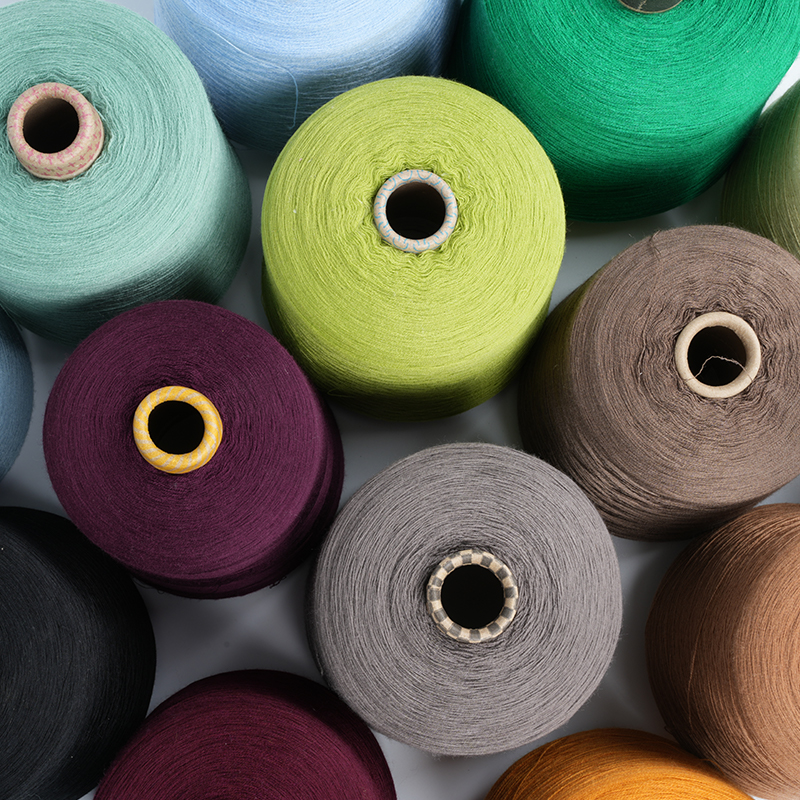 48Nm/2 Pure Wool Yarn48Nm/2 Pure Wool Yarn is crafted from 100% Australian wool, ensuring exceptional quality and purity. The fibers are carefully selected to deliver a soft, resilient, an...View Product →
Before you order, verify the actual fibre content and the tested count. A reliable supplier should be willing to share yarn count verification data and a lab test report. You can also consult our complete guide to yarn types, selection, and uses if you need a broader checklist.
Many knitwear designers do not want pure wool. They want wool's softness, but they also want silk's sheen, Tencel's flow, or acrylic's price stability. That is where blended yarns come in. A blended yarn is made from two or more fibres that are mixed before spinning. The blend ratio is intentional, and it changes the performance of the yarn in measurable ways.
Wool and silk is a classic combination. A 90% wool and 10% silk blend keeps the handling of wool and adds a subtle luster. A 60% wool and 40% silk blend creates a more fluid, silk-dominant hand, which is ideal for lightweight shawls and luxury knitwear. Our wool silk blend yarn is available in 70Nm/2 with both of these ratios, so you can choose the level of silk influence that suits your collection.
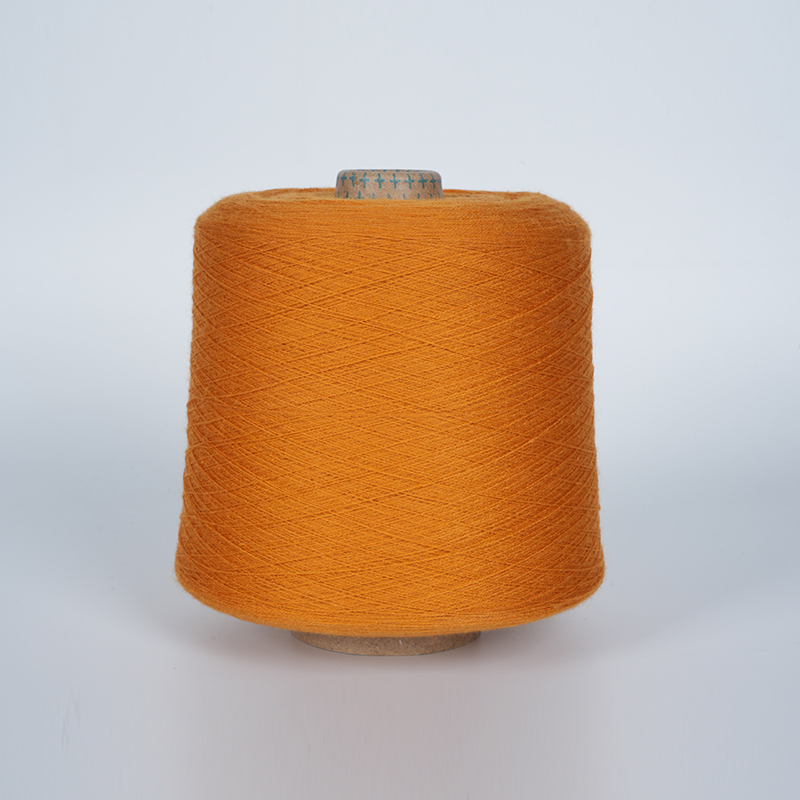 70Nm/2 90% Wool 10% Silk Blends YarnThis 70Nm/2 yarn is carefully blended from 90% high-quality wool and 10% silk, offering a soft and elastic texture. The wool provides natural warmth and moisture absor...View Product →
Wool and acrylic is another practical option. Acrylic is a synthetic fibre that adds durability and reduces cost while keeping the yarn machine-washable. Depending on the blend ratio, the yarn can feel almost like wool or more like a standard acrylic. Our wool acrylic blend yarn is offered in a range of counts, from 28Nm/3 to 80Nm/2, so it can serve chunky sweaters as well as fine garments.
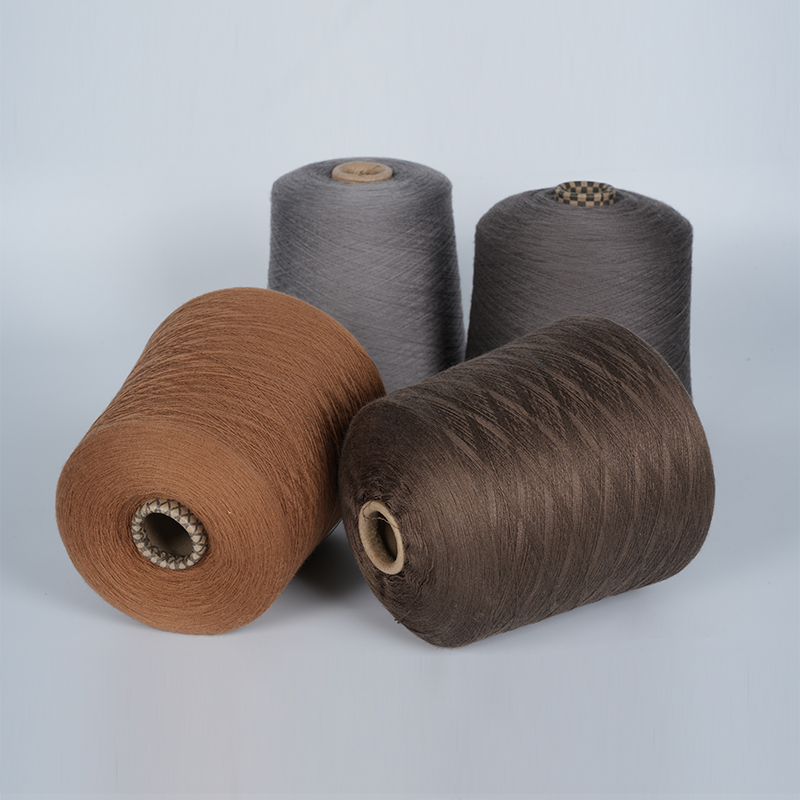 48Nm/2 Wool Acrylic Blends Yarn48Nm/2 wool-acrylic blended yarn is meticulously crafted from 50% high-quality wool treated with 70s Basolan and 50% anti-pilling acrylic, combining the natural softne...View Product →
Wool and Tencel is another blend we produce, with either 20% wool, 30% Tencel, and 50% acrylic, or 5% wool, 35% Tencel, and 60% acrylic. The second option has much less wool, so it will feel cooler and more breathable. Choosing the right blend is a decision about performance, not just looks.
Blended yarns give you a cost-performance lever. If the price of pure wool is too high, a wool acrylic blend lets you keep some wool warmth while lowering the unit cost. If you need better drape, a wool silk blend gives you that. If you need an eco-friendly story, a wool Tencel blend may be a better fit. The key is to know what you need and to communicate it in exact percentages.
Labels can mislead, especially when they are written for consumers rather than for B2B buyers. A product may be labelled "wool blend" even if wool makes up only 5% of the fibre content. Some labels use the word "woolen" to describe a hand feel rather than an actual fibre composition. That is why you should always demand a fibre content certificate, a test report, and a clear specification sheet.
There are practical ways to verify yarn composition without sending it to a lab. A burn test can distinguish animal fibres from plant and synthetic fibres, since wool smells like burning hair and leaves a small ash, while synthetics melt and leave a hard bead. A washing test can show felting behaviour. But these methods are only preliminary. For commercial orders, a laboratory test is the safest route.
In our own factory, we use a laboratory and testing equipment to check yarn strength, evenness, and fineness. We do this for every batch. That attention to detail is one reason our clients in Europe and the Middle East keep working with us.
Wool yarn quality depends not only on the fibre but also on how the fibre is processed. A wool spinning mill controls fibre selection, scouring, carding, combing, drafting, and twisting. These steps decide whether the yarn is smooth or hairy, strong or weak, even or uneven. For a garment manufacturer, the difference between good and bad spinning shows up directly in the finished product.
Our plant covers about 8,000 square meters and employs more than 100 people. We started production in 2003, and we have accumulated more than 22 years of fine wool yarn experience. Because we are a custom wool yarn manufacturer, we can adjust blends, counts, and finishing options according to your design brief. This is what we mean by collaborative weaving: working with customers to turn a fibre concept into a repeatable, saleable yarn.
When you source from a mill that has strong quality control, you reduce the risks of uneven dyeing, inconsistent count, high yarn breakage, and late surprises in production. These risks are real, and they can cost you more than the price difference between a good and a bad yarn.
So, is all yarn wool? No. Yarn is a broad category, and wool is one of the most valuable fibres in that category. If you need wool, understand the count, the fibre content, the blend, and the finishing treatment. If you need a yarn that is not wool, choose the fibre that fits the product. The right decision is made by people who ask the right questions. Whether you need pure wool, a wool silk blend, or a practical wool acrylic blend, a professional spinning mill can help you find the specification that works.
 Contact Us
 Products
 Send An E-mail
No. 189 Pengfei Road, Industrial Park, Tudian Town, Tongxiang City, Zhejiang Province, China
 Mobile


 English
 Français
 Español
 عربى
عربى