Types of Wool for Knitting: Breed, Micron and Spinning Explained for Knitters
Pull two balls of yarn off a shop shelf and both bands may read "wool." Knit them into the same 10 cm square and you get two different fabrics. One closes up small gaps with a soft, slightly hazy surface; the other holds crisp, well-defined cables and feels dry, almost cottony. Neither label is lying. The difference comes from the animal, the staple, and the way the fiber was prepared before spinning.
So here is the short answer first. When you compare types of wool for knitting, four variables decide nearly everything: fiber diameter in microns, staple length and crimp, spinning system, and any finishing treatment applied to the yarn. Get those four right and most of the unpleasant surprises, from itch to sagging ribbing to unexpected felting, disappear before you cast on.
Content
A pattern tells you gauge and needle size. It rarely tells you that a 22-micron wool and a 32-micron wool at the same gauge will behave like two different materials after three washes. These are the four things worth checking:
Change one variable and the finished garment changes. Change three and you have a different product carrying the same word on the band.
Wool fiber diameter is measured in microns, or thousandths of a millimetre. Below roughly 24 microns, most knitters can wear the fabric directly against skin. Between 25 and 30 microns, a sweater is usually comfortable over a shirt. Above 30 microns, fiber ends are stiff enough to press against skin, which is the sensation most people call itch.
The average matters, but so does the spread. A yarn with a 24-micron average can still contain fibers from 15 to 40 microns, and it is the thickest few percent you feel. That is why two yarns with the same stated micron count can feel noticeably different on the needles.
| Wool type | Typical diameter | How it knits | Where it works |
|---|---|---|---|
| Fine merino | 17–19 microns | Very soft, fluid drape, low resilience | Lace, next-to-skin layers |
| Merino | 20–24 microns | Soft, blooms lightly, holds ribbing | Sweaters, hats, socks |
| Bluefaced Leicester | 24–28 microns | Lustrous, strong, shows texture | Cables, colourwork, shawls |
| Corriedale | 25–30 microns | Balanced, hard-wearing, moderate halo | Outerwear, mittens, blankets |
| Shetland | 23–30 microns, variable | Warm, fuzzy, light for its volume | Colourwork, hap shawls |
| Wensleydale | 30–36 microns, smooth-scaled | Lustrous, drapey, little elasticity | Statement accessories, blends |
| Romney | 30–35 microns | Firm, resilient, weather-resistant | Coats, hard-wearing knits |
Merino is the default fine wool: dense crimp, high elasticity and a soft hand. It also pills, and it felts under heat and agitation unless it has been treated or blended. Most commercial merino sock yarns carry 15 to 25 percent nylon for exactly that reason.
Bluefaced Leicester is the workhorse of cable knitting. Its long staple, often 10 to 15 cm, gives strength and a subtle sheen, so stitch patterns stay sharp. Shetland is the opposite character: light, airy and forgiving, ideal for stranded colourwork where small gaps need to close. Corriedale sits between the two, durable enough for mittens without feeling harsh.
Wensleydale and Romney have long, lustrous fibers with a distinct surface scale. They drape and reflect light, but their low crimp means less memory, so ribbing relaxes over time. Blending them with a finer, crimpier wool is the usual fix.
Woollen spinning cards the fiber so the strands cross in many directions and trap air. The result is warm, light, haloed, a little weaker and quicker to pill. Worsted spinning combs the fibers parallel before spinning, producing a smooth, strong yarn with excellent stitch definition and slightly less warmth per gram.
Then there is the count. A yarn marked 48Nm/2 is two plies folded from a single yarn measuring 48 metres per gram. Folded, that lands near 24 metres per gram, roughly 2,400 metres per 100 grams. Most hand-knitting yarns sit between about 2 and 8 Nm, so mill yarns for fine-gauge knitwear are far finer, and their behavior in a swatch is not a scaled-up version of a chunky yarn.
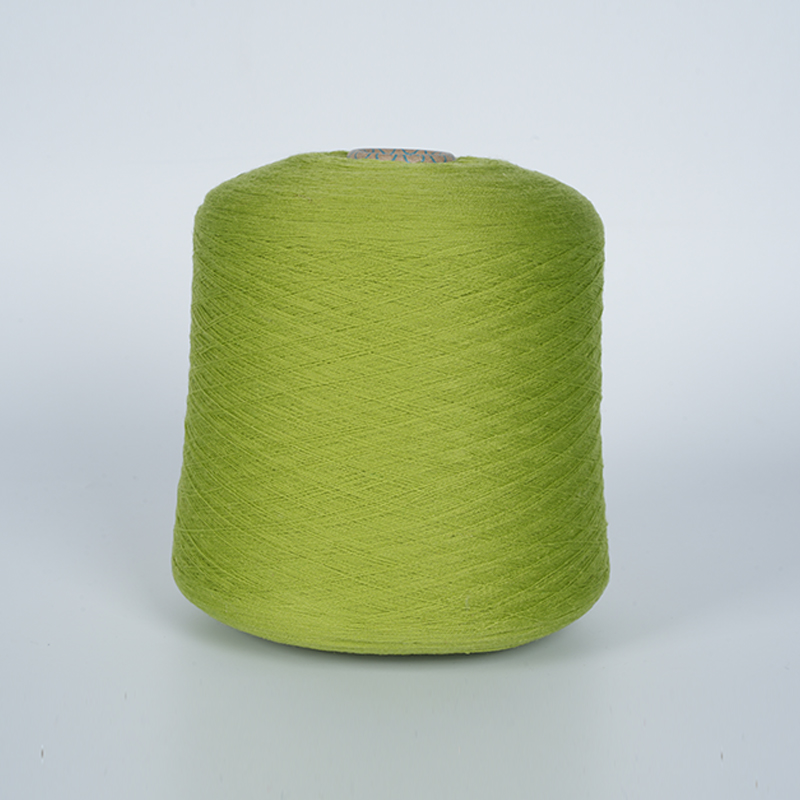 Extra-Fine Merino Pure Wool Yarn CategoryCategory covering extra-fine Merino pure wool yarn in 48Nm/2 and 60Nm/2 counts, intended for fine-gauge knitwear, scarves, and lightweight next-to-skin pieces.View Product →
If you are sourcing rather than knitting by hand, the count, ply and blend percentage on the specification sheet tell you more about the finished fabric than any photograph of a cone.
Basolan treatment is a controlled oxidative process that smooths the scale edges on the fiber surface. The practical effects are reduced shrinkage, better machine-washability and a slightly firmer, less hairy hand. Stitch definition improves, while the halo that makes woollen-spun yarns forgiving gets muted. It is a trade, not a free upgrade.
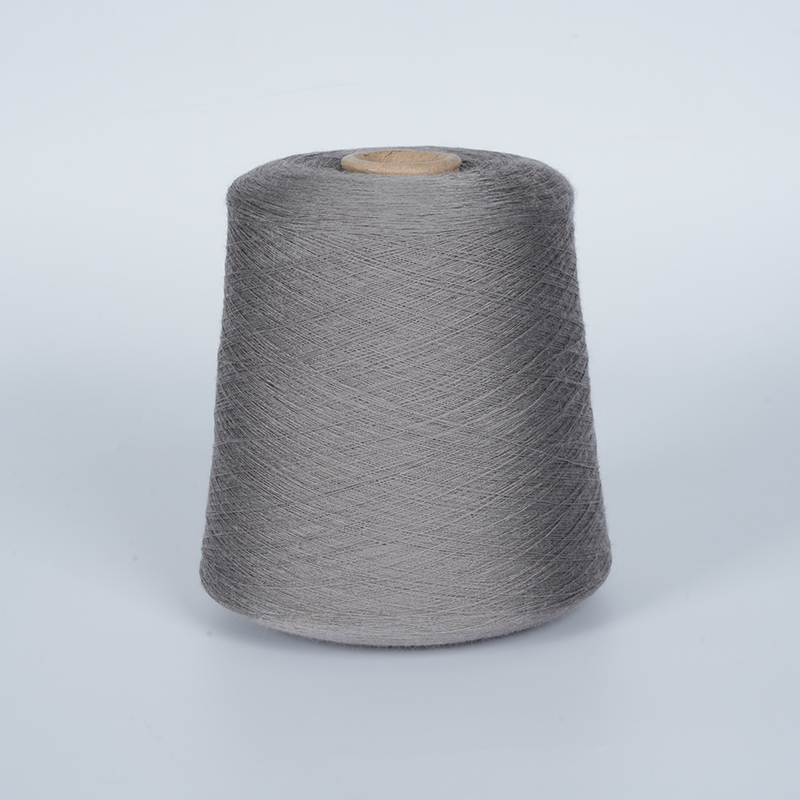 Basolan Treated Premium Wool Yarn SeriesTreated wool yarn series in multiple counts, offering softer hand, reduced shrinkage and pilling, and stable shape for premium knitwear and woven fabrics.View Product →
Blends work at the fiber level in a similar way. Acrylic adds durability and lowers cost, though it also reduces elasticity recovery, which shows up first in cuffs and necklines. Lyocell-type cellulosics such as Tencel bring drape, a cooler hand and better moisture movement. Silk adds lustre and weight; cashmere protein fiber is finer and softer than most wool and is usually blended at 30 to 50 percent to stay spinnable at fine counts.
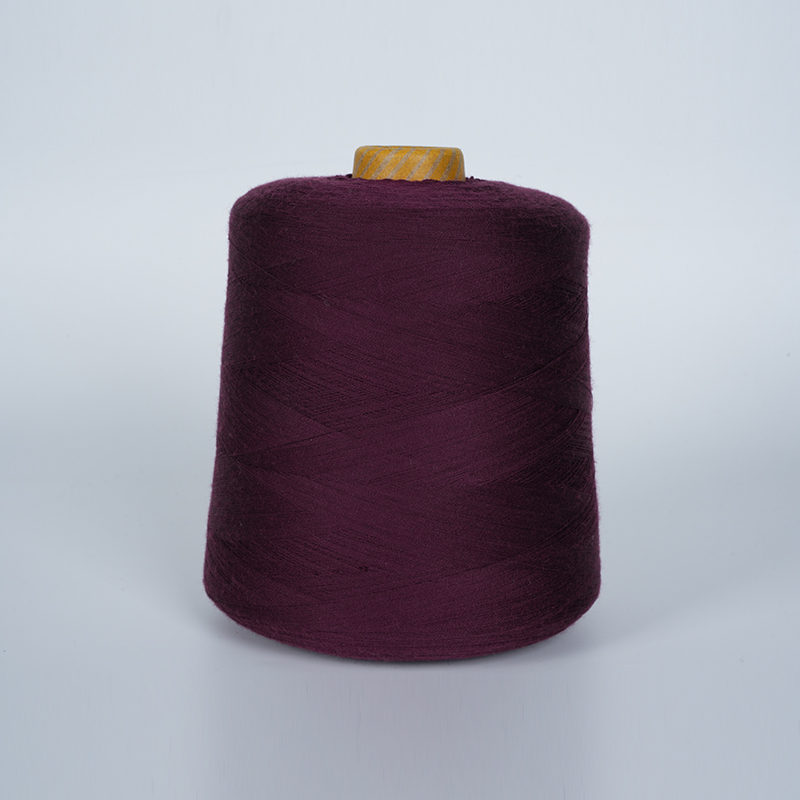 70Nm/2 Wool and Cashmere Protein Fiber YarnFine 70Nm/2 worsted blend of 50% wool and 50% cashmere protein fiber for soft, warm, breathable premium sweaters, scarves, and refined home textiles.View Product →
Cotton and ramie move the other direction, toward warm-weather knits with little halo and no felting risk, which is why they appear in spring and summer yarn ranges.
Start from the fabric you want, not from the fiber you like the sound of. A rough mapping holds up well in practice:
Where a project sits between two options, swatch both in the actual stitch pattern and wash the swatches before deciding. If you want the fuller comparison of how these types get selected and where each one ends up, a complete guide to wool yarn types and their uses walks through the same criteria from a sourcing angle.
Wool is not one material with one behavior, and the most expensive band on the shelf is not automatically the right one. Breed sets the diameter and crimp, the spinning system sets the surface and strength, and treatments and blends set how the fabric survives its first winter. Those are the variables worth writing into a specification or checking in a swatch.
For buyers specifying yarn rather than knitting single skeins, the mill behind the label matters as much as the breed. Huafu Textile, a custom wool yarn manufacturer working from Tongxiang since 2003, runs an in-house laboratory and spins counts from 28Nm/3 to 80Nm/2 across pure wool, treated wool and natural blends, which is the range where fine-gauge knitwear lives. Confirm the fiber, the count and the finish, then verify all three in a washed swatch.
 Contact Us
 Products
 Send An E-mail
No. 189 Pengfei Road, Industrial Park, Tudian Town, Tongxiang City, Zhejiang Province, China
 Mobile


 English
 Français
 Español
 عربى
عربى