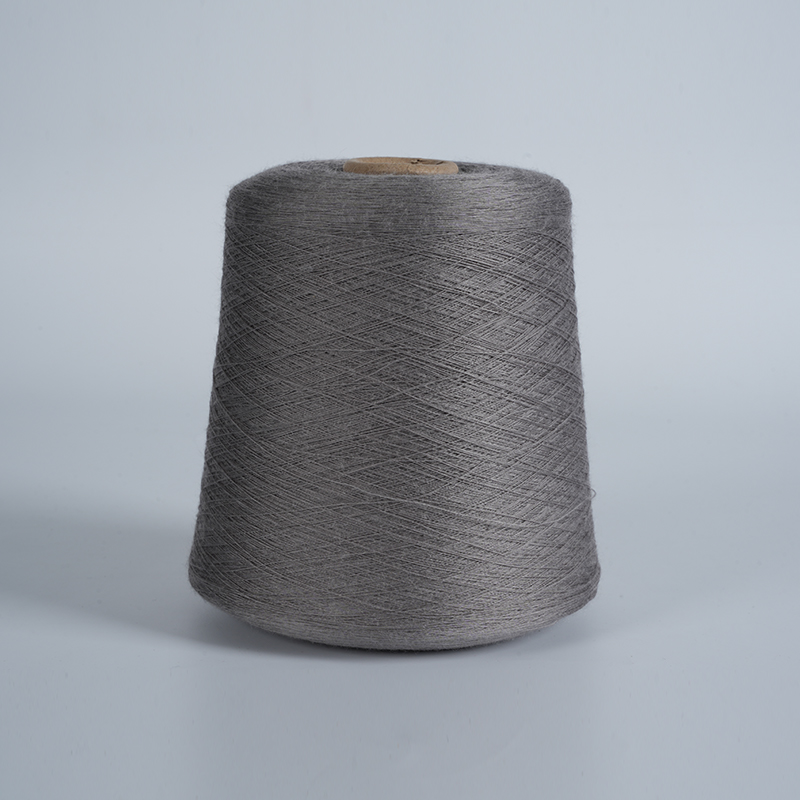
Worsted or DK Weight Yarn: How to Tell Them Apart and Substitute With Confidence
A pattern calls for worsted weight, the yarn you actually love is sitting on the shelf in DK, and the whole project depends on whether that swap is safe. Short answer: it usually is. The two weights sit next to each other on the standard ladder, roughly two wraps per inch and one needle size apart, and most patterns tolerate the exchange if you match gauge, rework the stitch counts and buy enough extra length to finish the last sleeve.
The longer answer is that the label is a shortcut, not a measurement. Weight names come from a voluntary category system, and the yarn inside a band varies enough that a firm DK can knit like a worsted while a lofty worsted can knit like a DK. Read the numbers, knit a swatch, and treat the name as a hint rather than a rule.
Content
Four measurements separate the two bands: stitches per 10 cm, wraps per inch, needle size and length per 100 g. Put them side by side and the gap looks smaller than the names suggest.
| Specification | Worsted weight | DK weight |
|---|---|---|
| Standard category | 4, medium | 3, light |
| Wraps per inch | 9 to 11 | 11 to 13 |
| Knitting gauge, blocked stockinette | 16 to 20 stitches per 10 cm | 20 to 22 stitches per 10 cm |
| Suggested knitting needles | 4.5 mm to 5.5 mm | 3.75 mm to 4.5 mm |
| Suggested crochet hook | 5.5 mm to 6.5 mm | 4.5 mm to 5.5 mm |
| Typical length | 180 to 200 m per 100 g | 230 to 250 m per 100 g |
| Resulting fabric | Firmer, holds shape, suits outerwear | Lighter, more drape, suits layering |
Two rows cause most of the trouble. The length gap is the practical one: DK commonly delivers 20 to 25 percent more metres per 100 g, which is exactly why a straight swap strands people halfway up a second sleeve. Gauge is the technical one, and it is measured on blocked stockinette, so textured stitches, ribbing and colourwork can close the difference between the bands almost completely.
Worsted is a spinning method before it is a weight. Worsted-spun yarn is combed so the fibres lie parallel: smooth, strong, low in halo, dense for its diameter. Woolen-spun yarn is carded, airy and full of trapped air, so the same nominal weight knits into a loftier, lighter fabric at a different gauge. That is why a woolen-spun worsted can measure like a DK, and why a tightly twisted worsted-spun DK can measure like a light worsted.
When a pattern says worsted, read it as "knit this at about 18 stitches per 10 cm in stockinette". That sentence survives a substitution; the word alone does not.
If you are weighing up other categories for a project, this guide to yarn types and selection walks through the full ladder and where each band works best.
Mills describe thickness with a count rather than a weight name. The metric count, Nm, tells you how many metres of single yarn make one gram. A plied designation such as 2/48 Nm means two plies of a 48 Nm single, which resolves to 24 Nm: about 24 metres per gram, or roughly 2,400 metres per 100 g. Divide the single count by the ply number and you have the resulting count.
Run that arithmetic across the ladder and the weight bands start to appear. A machine-knit worsted-weight fabric typically runs near 2/28 Nm, while DK-weight fabric lands around 2/20 to 2/24 Nm. The 2/48 to 2/60 Nm counts in our premium wool yarn range sit in fine-gauge territory, where the aim is a light, smooth, drapey fabric rather than a dense outerwear hand.
Finishing matters as much as count at that end of the scale. Basolan-treated wool is shrink-resisted, so a fine-gauge knit survives machine washing without felting down a size, and the yarn runs predictably on fine-gauge equipment.
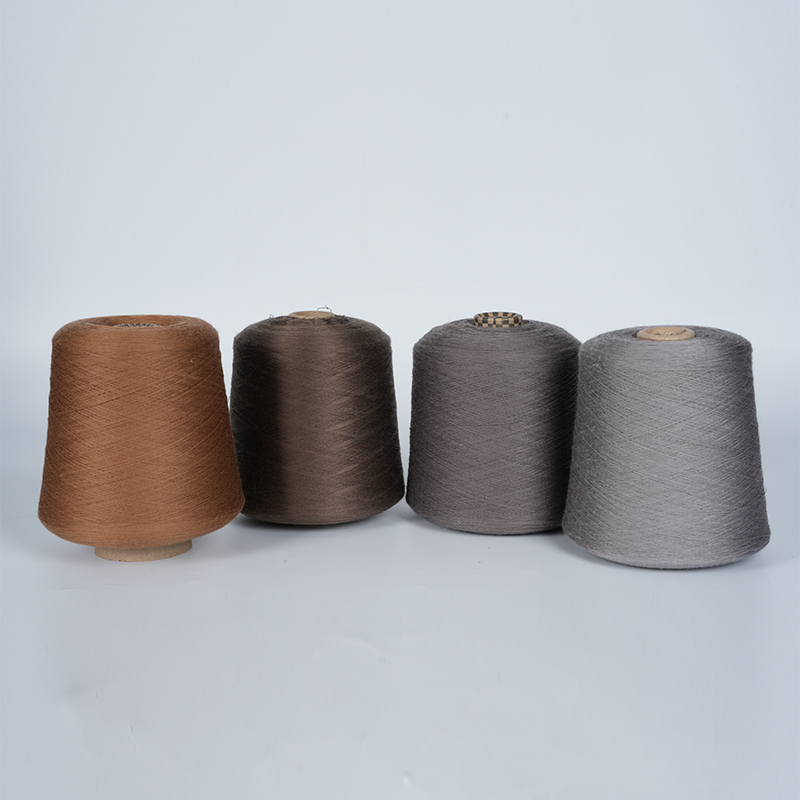 48Nm/2 Basolan Treated Premium Wool YarnA fine-gauge 18.5μm wool yarn with Basolan shrink-resistance for soft, washable base layers and lightweight knits.View Product →
For pieces that will be worn against the skin and washed often, an easy-care treatment softens the hand and stabilises the fabric over repeated cycles, which is where a base layer earns its keep.
 60Nm/2 Easy Care Premium Wool YarnA 17.5μm easy-care wool yarn with anti-pilling performance, aimed at soft next-to-skin knits that keep shape through repeated washing.View Product →
Blending changes diameter and behaviour at the same count. A 90/10 wool-silk drafts with extra strength and a faint sheen, blocks flatter than pure wool, and reads thinner on the ruler than the number implies. Add acrylic or Tencel and the yarn gains bulk per gram while giving up some elasticity, which shows up as a looser, livelier fabric.
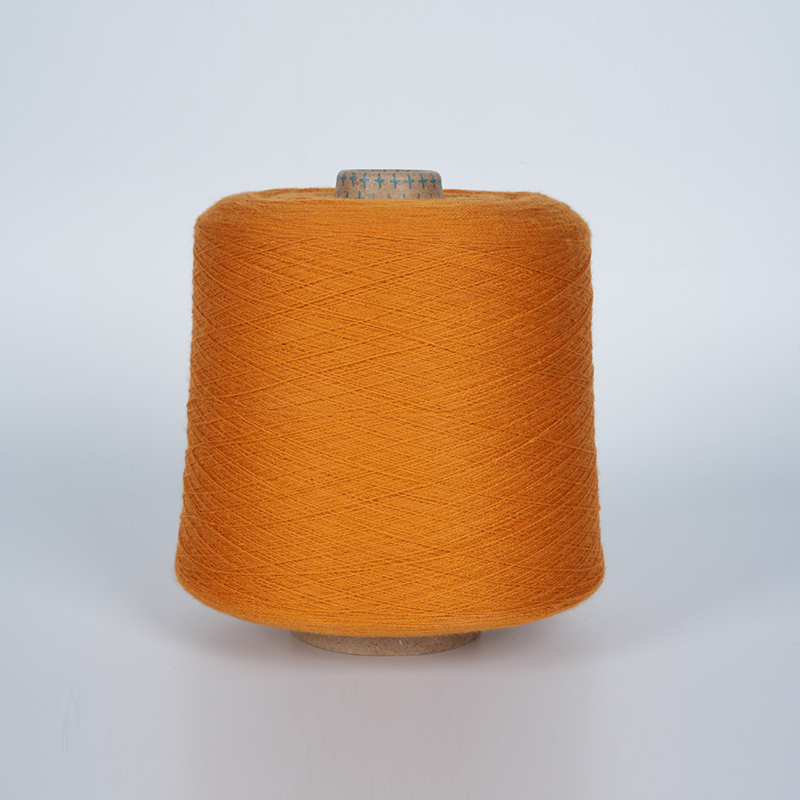 70Nm/2 90% Wool 10% Silk Blends YarnA wool-silk blend with a faint sheen and extra drafting strength, useful for lightweight knits and scarves where drape and smoothness matter.View Product →
Twist is the other hidden variable. High-twist yarn packs the fibres tight, so it looks thinner and knits into a firmer cloth; soft-twist yarn blooms after the first wash and can fill out half a stitch or more. Count variation between production lots is normal in spinning, which is why a swatch from the actual lot is worth the hour it costs.
Whether you are ordering sample cones for a collection or a sweater quantity for a small run, a spinner can only hit a weight band if you describe it in measurable terms. Send:
A vague brief produces yarns that swatch correctly and behave wrongly, and the difference usually appears after the first wash rather than on the cone.
Worsted and DK are neighbours, not opposites. One is a little thicker, the other a little longer per gram, and both are defined by the gauge they produce rather than the word on the band. Match the gauge, recalculate the stitch counts, buy the extra skein, and note the lot number before the label goes into the bin. That habit solves more substitution problems than any chart, including this one.
 Contact Us
 Products
 Send An E-mail
No. 189 Pengfei Road, Industrial Park, Tudian Town, Tongxiang City, Zhejiang Province, China
 Mobile


 English
 Français
 Español
 عربى