Message Feedback
About HUAFU
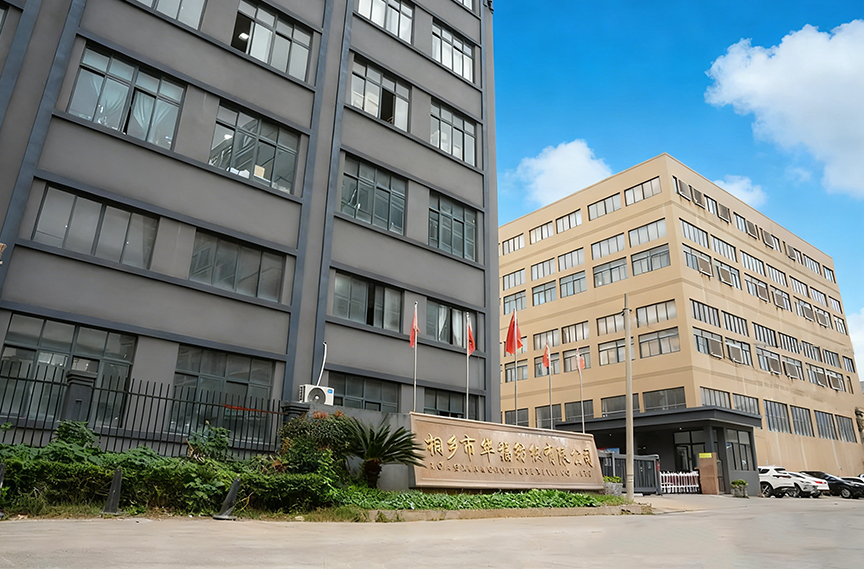
Established in 2003 in Tongxiang, Zhejiang, HUAFU operates from a facility spanning approximately 8,000 square meters, equipped with a range of internationally advanced production equipment. Specializing in the manufacturing of worsted yarn, the company focuses on exceptional quality andinnovative technology as its core strengths, supporting both its own growth and the innovation of its partners. As Custom Wool Yarn Manufacturers and OEM Wool Yarn Suppliers in China, We have our own laboratory and the most advanced testing equipment in the industry.
HUAFU upholds the brand philosophy of "Collaborative Weaving," placing people at the heart of its mission and partnership as a priority. We are dedicated to transforming natural and technological fibers into vibrant yarns filled with life. Sustainable Eco-Friendly Wool Yarn Wholesale. Through continuous research and development of products that benefit our clients, we insist on meticulous attention to every stage—from raw material selection to spinning processes—ensuring that each strand of yarn fulfills a promise of exceptional quality while also serving as a tribute to the gifts of nature.
News and Information
Feb 28, 2026 • Industry News
Feb 19, 2026 • Industry News
Feb 09, 2026 • Industry News
In worsted spinning, fiber diameter (often discussed in microns) is a primary driver of softness and prickle sensation, but it also affects strength and pilling behavior. Finer wool tends to feel softer against skin, yet may require tighter twist or blending strategies to maintain abrasion resistance for high-wear items.
A practical way to choose a yarn is to connect diameter to garment zone: next-to-skin knits prioritize low prickle, while outer layers can trade a bit of softness for durability. In our lab workflow, we validate that the selected fiber mix and spinning parameters support both comfort and long-term appearance.
| Fiber Diameter Tendency | Typical Handfeel | Durability Consideration | Common End Uses |
|---|---|---|---|
| Finer | Softer, lower prickle | May need twist/structure control | Base layers, scarves, premium knits |
| Medium | Balanced | Good strength-to-softness ratio | Sweaters, cardigans, uniforms |
| Coarser | Firmer, more robust | High abrasion resistance | Outerwear, blankets, upholstery blends |
If you’re targeting a specific feel, ask for a diameter window plus a performance goal (pilling grade, abrasion cycles, or bursting strength). That combination is far more actionable than “soft” alone.
Buyers often request counts and ply based on past habits, but the real levers are twist level, ply balance, and final yarn density. Two yarns with the same nominal count can behave differently in knitting/weaving if their twist multipliers or plying tension differ.
| Specification Lever | What You Gain | What You Risk | Best Use Case |
|---|---|---|---|
| Higher twist | Strength, less fuzz | Harsher handfeel, torque | Socks, uniforms, weaving warp |
| Lower twist | Softer, fuller look | More pilling, weaker | Luxury knits, scarves |
| More plies | Roundness, balance | Cost, weight change | Stable fabrics, clear stitches |
| Balanced ply/twist | Lower spirality and better dimensional stability | Requires process control | Premium knitwear, tailored fabrics |
When you request custom wool yarn, provide the fabric structure (gauge, stitch, or ends/picks) and finishing route. That context lets us tune twist and ply for the result you actually sell—not just a number on a label.
A lab dip proves a color match on a controlled sample; it does not automatically guarantee identical appearance across different yarn structures, dye lots, or finishing paths. Wool’s natural variability, blending precision, and scouring history can shift uptake—especially in pale shades, saturated brights, and optical whites.
We run shade control as a system—material selection, process consistency, and instrument testing—because the most expensive problem is a “correct” color that looks wrong in the store.
Wool fibers respond to moisture, heat, and mechanical action. Even when a yarn is strong, the finished fabric can shrink or skew if the yarn torque, stitch geometry, and finishing are not aligned. For buyers, the most practical approach is to target an end-performance spec (e.g., max shrinkage) and back-calculate yarn structure and finishing.
In our production practice, stability is not a single step—it’s an engineered outcome. When we align twist balance and finishing, we can often achieve more predictable post-wash sizing without sacrificing handfeel.
Pilling is not simply “bad wool.” It’s a combination of fiber length distribution, yarn hairiness, twist level, fabric abrasion points, and finishing. Pills form when loose fiber ends migrate to the surface and entangle; they stay when the fiber is strong enough not to break away.
We like to say: if you can describe where the garment rubs (cuffs, side seams, underarm), we can design the yarn to protect that zone. That’s where our testing equipment turns into real commercial value for your line.
Sustainability in custom wool yarn procurement becomes meaningful when it’s anchored in traceability, chemical management, and durability (longer product life reduces replacement and waste). Buyers can reduce risk by requesting documentation that matches their market’s compliance expectations and by aligning quality targets with longer wear life.
Because we operate with in-house testing and strict process checkpoints, we can support eco-friendly programs with documentation and repeatability—marketing is easy; verification is the hard part.
 Contact Us
 Products
 Send An E-mail
No. 189 Pengfei Road, Industrial Park, Tudian Town, Tongxiang City, Zhejiang Province, China
 Mobile


 English
 Français
 Español
 عربى
عربى